
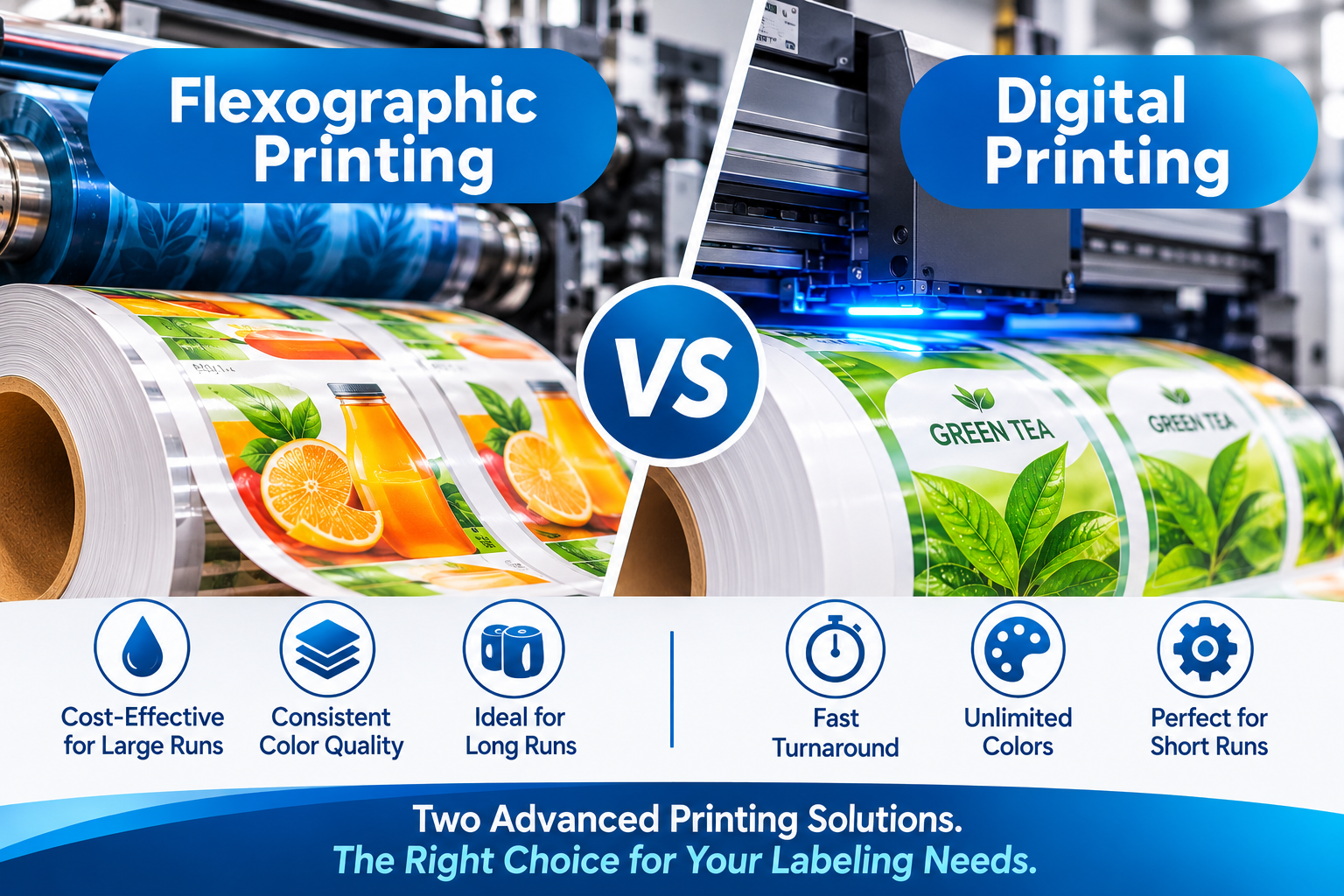
Choosing a printing method can feel overwhelming, especially when you’re planning packaging, labels, or large print runs. Two of the most popular technologies today are flexographic printing and digital printing. Each has real strengths, and the right choice depends on your quantity, budget, timeline, and design needs. Here’s a clear breakdown to help you decide.
At American Non Stop Label (ANSL), we have produced custom labels since 1988, and we can guide you through both options so you can choose the method that fits your project.
What Is Flexographic Label Printing?
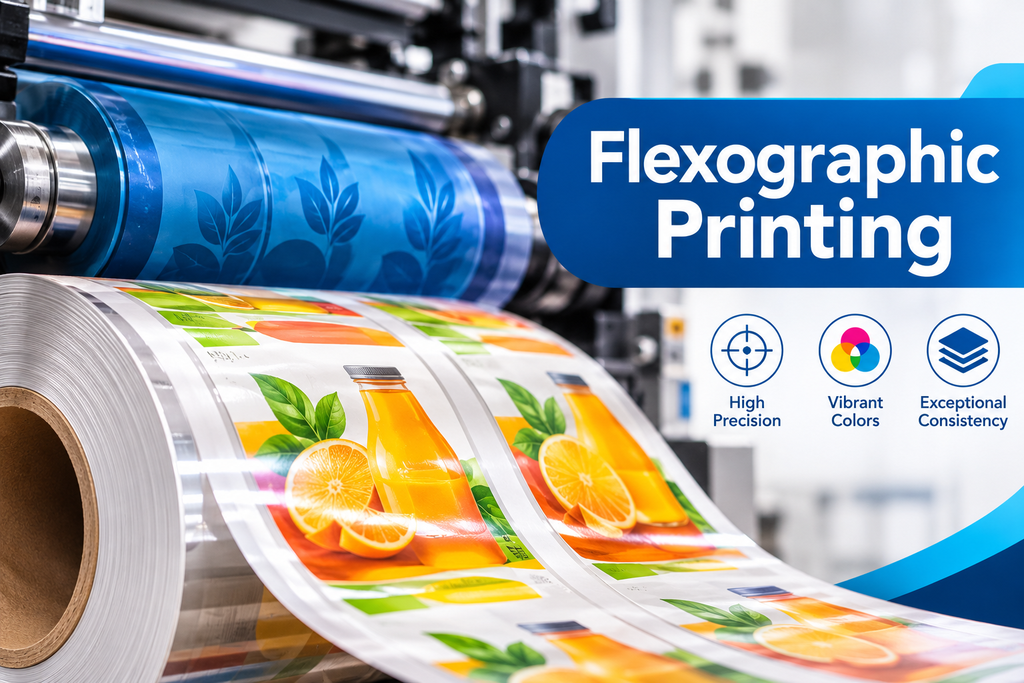
Flexographic printing, often called “flexo,” is a roll-to-roll process that uses flexible relief plates wrapped around rotating cylinders. Each plate transfers fast-drying ink onto the material, usually through an anilox roller that meters the ink precisely. Because every color in your design needs its own plate, setup takes time and money upfront.
Flexo is the workhorse behind much of the packaging you see every day: corrugated boxes, food packaging, labels, paper bags, and flexible films.
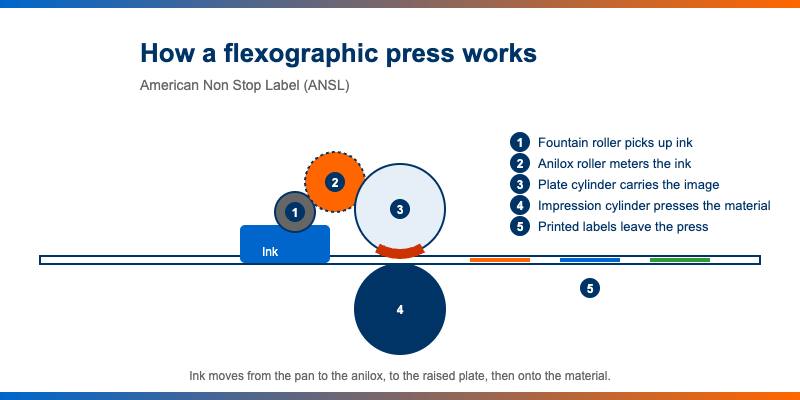
Key advantages of flexo:
- Low cost at high volume. Once plates are made, the cost per unit drops dramatically as quantities rise.
- Efficiency. Modern flexo presses run at very high speeds, so large orders are completed efficiently.
- Material versatility. It prints on paper, cardboard, plastic films, foil, and other non-porous surfaces.
- Ink options. Water-based, UV-curable, and solvent-based inks give you flexibility for different applications, and metallic or spot colors are well supported.
- Durability. Flexo prints hold up well on packaging that needs to withstand handling and shipping.
Limitations to consider:
- Plates and setup add upfront cost, which makes short runs expensive.
- Design changes mean new plates, so versioning is costly.
- Turnaround for the first run is slower because of plate-making and press setup.
What Is Digital Label Printing?
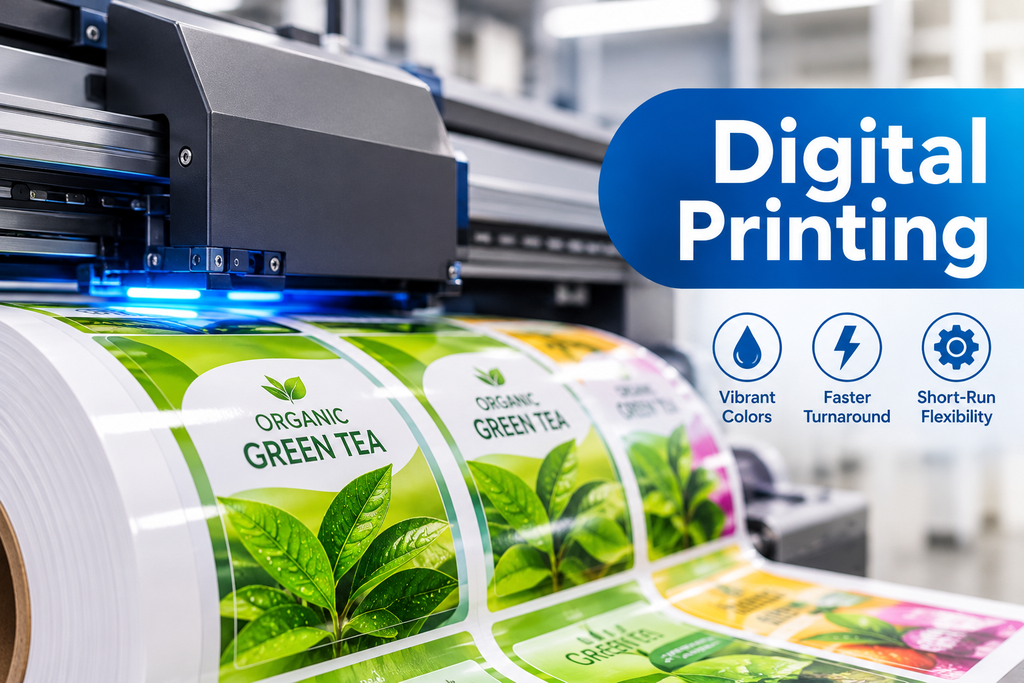
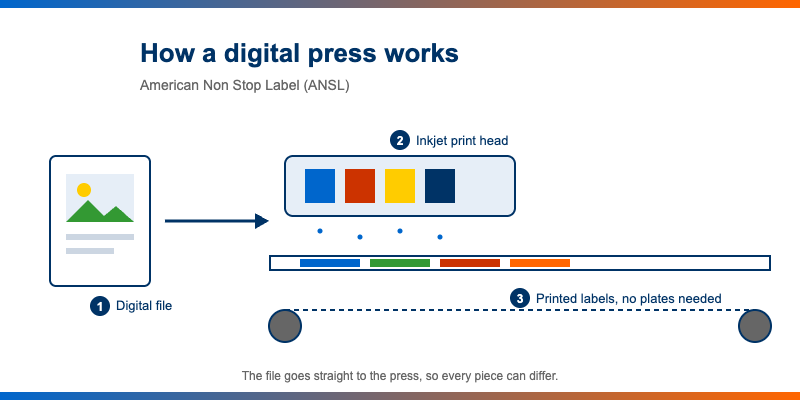
Digital printing skips plates entirely. The design goes straight from a digital file to the press using inkjet or toner technology. There’s no physical setup beyond loading the file and the material, so you can go from artwork to finished product quickly.
Key advantages of digital:
- No plate costs. This makes it ideal for small and medium runs.
- Responsive turnaround. With minimal setup, jobs can often ship in days rather than weeks.
- Variable data and personalization. Each piece can be different, whether that’s unique names, QR codes, serial numbers, or regional versions.
- Easy design changes. Updating artwork is as simple as swapping the file, which is great for testing new designs or seasonal products.
- Full-color imagery. Photographic images and complex gradients print beautifully without needing extra plates for each color.
- Reduced waste. Because setup is minimal, there’s less material wasted before the job runs clean.
Limitations to consider:
- Cost per unit stays relatively flat, so it becomes expensive at very high volumes.
- Material choices can be narrower, depending on the press and ink or toner system.
- Matching specific spot or brand colors can be harder than with flexo, though technology keeps improving.
Head-to-Head Comparison
| Factor | Flexographic | Digital |
|---|---|---|
| Best run length | Long runs (typically thousands and up) | Short to medium runs |
| Setup cost | Higher (plates required) | Minimal |
| Cost per unit at scale | Low | Stays relatively constant |
| Turnaround | Slower to start, efficient once running | Responsive |
| Personalization | Not practical | Excellent |
| Design changes | Costly (new plates) | Easy and cost-effective |
| Material range | Very broad | More limited |
| Spot and metallic colors | Excellent | Improving, but limited |
When to Choose Flexo
Flexographic printing makes the most sense when you have:
- A large, consistent order that won’t change often
- A finished design you’re confident in
- Packaging on corrugated board, films, or other specialized substrates
- A need for precise brand color matching or metallic effects
- A goal of getting the lowest possible cost per unit
When to Choose Digital
Digital printing is the better fit when you have:
- A small or medium order, or a product you’re still testing
- Multiple SKUs or designs that each need small quantities
- A tight deadline
- Personalized or variable content
- Seasonal, promotional, or limited-edition products
- A desire to avoid storing large amounts of inventory
Can You Use Both?
Absolutely, and many brands do. A common strategy is to use digital printing for prototypes, pilot runs, and market testing, then switch to flexo once a design is proven and demand justifies a larger order. Some manufacturers even offer hybrid presses that combine both technologies in a single pass, such as flexo for base colors and digital for variable elements.
ANSL Labels Capabilities
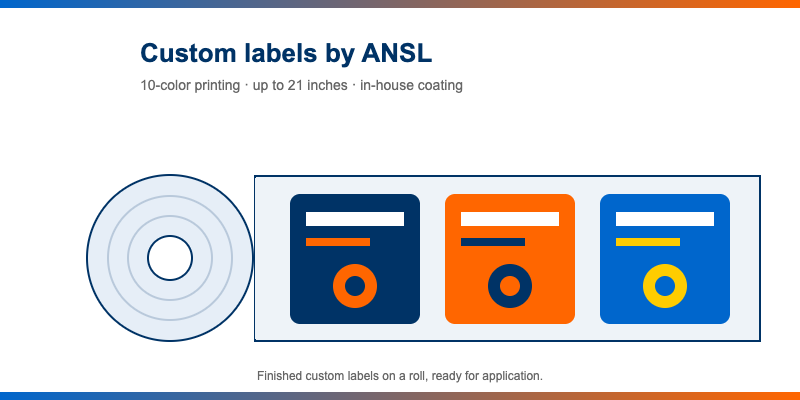
When you need custom labels, ANSL Labels gives you the equipment to match the job. Our capabilities include:
- 10-color printing for rich, accurate artwork and brand colors
- Print widths up to 21 inches
- In-house coating equipment, which gives us an edge over our competitors
- Customized coating to suit the demands of your label and application
Owning our coating equipment means we control the finishing step ourselves, so we can tailor the coating to your product. See our equipment, or explore variable data labels and hot and cold foil labels.
With 37+ years of labeling expertise and ISO 9001:2015 certified quality, ANSL, based in Ontario, California, serves customers across North America and Latin America.
Frequently Asked Questions About Flexographic and Digital Label Printing
Which is better for short runs, flexographic or digital label printing?
Digital printing. It needs no plates, so setup costs stay low on small and medium runs, and artwork changes are easy.
When does flexographic printing become more cost-effective?
On long, stable runs, typically thousands of labels and up, where plate costs are spread across the volume and the cost per label drops.
How many colors can ANSL print?
ANSL offers 10-color printing on widths up to 21 inches.
Does ANSL coat its own custom labels?
Yes. We own our coating equipment, so we can provide customized coating in-house.
The Bottom Line
There’s no single winner. Flexographic printing wins on cost and speed for high-volume, stable orders, while digital printing wins on flexibility, speed to market, and personalization for shorter runs. Start by looking at your quantity, timeline, and how often your design might change, and the right choice usually becomes clear.
Not sure which fits your project? Talk with American Non Stop Label (ANSL) about your custom label specs and volumes. We will walk you through the numbers and help you find the right balance of quality, cost, and responsiveness. Get a quote at anslabels.com or call (800) 99-LABEL.
A World of Labeling Solutions